
From Industrial Robots to Everyday Life: My Journey into Service Robots – Part 2
12 Feb 2026
Why Human Factors Matter in Service Robotics
When people think about robots, they often imagine sensors, cameras, AI, and complicated software. But the more time I spend studying service robots and watching them in real environments, then the more I realise that the biggest challenge is not the technology at all.
It’s people.
Humans are wonderfully unpredictable. We walk in strange patterns, stop suddenly, change direction without warning, get distracted, carry things that block our view, talk on the phone, or simply do not pay attention to what is around us. Children run, jump, and touch everything. Elderly users move slowly or carefully. Some people rush and others wander. And none of us behave the same way twice.
So when we introduce service robots into human spaces, the key question becomes.
How do we make a robot behave safely around all these unpredictable humans?
This is where human factors come in, understanding how people act, react, and interpret movement. It is not just about what the robot can do but it is about how people will feel when the robot does it.
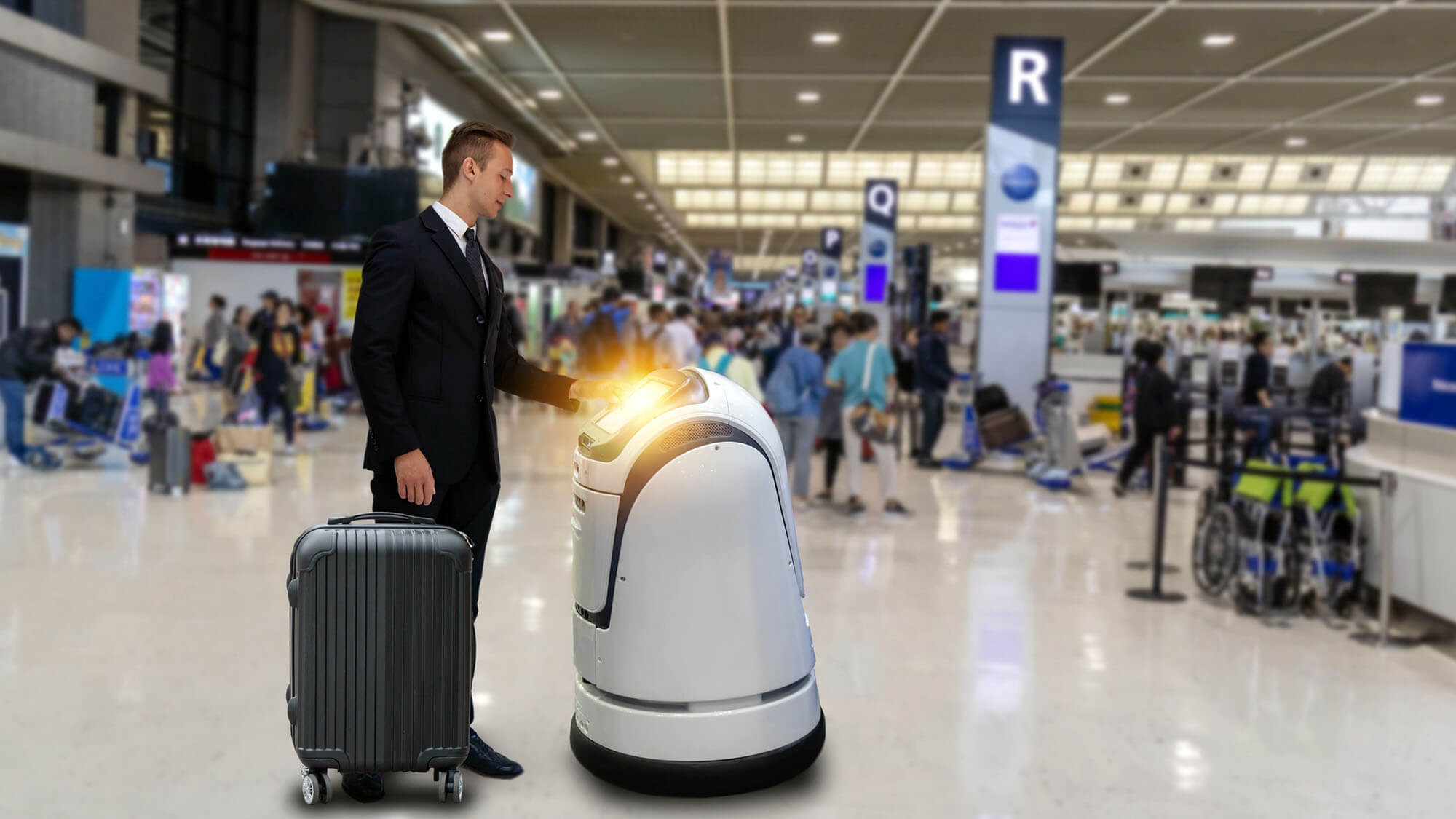
I still remember watching a service robot navigate between tables in a busy restaurant in Japan. The robot was not doing anything fancy. It was not “smart” in a human way. But it moved smoothly and calmly, at a comfortable speed. It did not get too close to anyone. It paused politely when people walked by. It turned gently, without sudden motion. And because of that, customers did not feel nervous, they simply stepped aside naturally and continued their conversations.
That is good design. That is human factors in action.
People do not need robots to be intelligent. They need robots to be predictable.
A predictable robot is a safe-feeling robot. It communicates its intentions through movement: slowing down, pausing, turning smoothly, or giving people space. Even without speaking, a robot can “tell” nearby humans what it is about to do.
Think of it like the silent negotiation we humans do every day. Two people walk toward each other in a hallway. With a tiny gesture like eye contact, a small step to the side, or a slight speed change. both instantly understand who will pass first. Robots cannot do those social signals, but they can behave consistently enough that humans feel confident walking around them.
This becomes even more important when you think about children. Kids are naturally curious. If they see a robot, they will run to it, touch it, maybe even try to ride it. A safe robot should be ready for that moment. It must move slowly enough to avoid harming them. It must be stable enough not to tip over. It must stop gently if someone suddenly gets in front of it. And it must avoid any behaviours that could scare or endanger them.
Elderly users create another challenge. They may react more slowly or need more time to understand what the robot is doing. A robot that turns too fast or gets too close can make them uncomfortable. Good design means giving people space and time, especially the ones who need it most.
All of this is why human factors are so important in-service robotics. It is not about making robots clever. It is about making robots good companion, polite, calm, and predictable.
The goal is not to force humans to adapt to robots. It is the opposite: robots must adapt to humans.
And when they do, something interesting happens people stop paying attention to the robot. They trust it. They treat it like part of the environment. They move naturally around it. That quiet acceptance is the real sign of good design.
In the next blog, I will share what happens behind the scenes. How service robots are tested before being allowed into public spaces, and why testing often looks more like a playground than a laboratory.

You may be interested in...
Robots & Robotic Testing and Certification Solutions
From collaborative robots in the automotive industry, to autonomous mobile storage for the retail industry, to robotic personal assistants in your day-to-day activities, Intertek supports the robotic industry across the new industrial revolution.