
Moving From EV Batteries into Data Center Backup Power
13 Nov 2026
What Engineers Need to Rethink about Runtime, UPS Integration, Testing and Certification
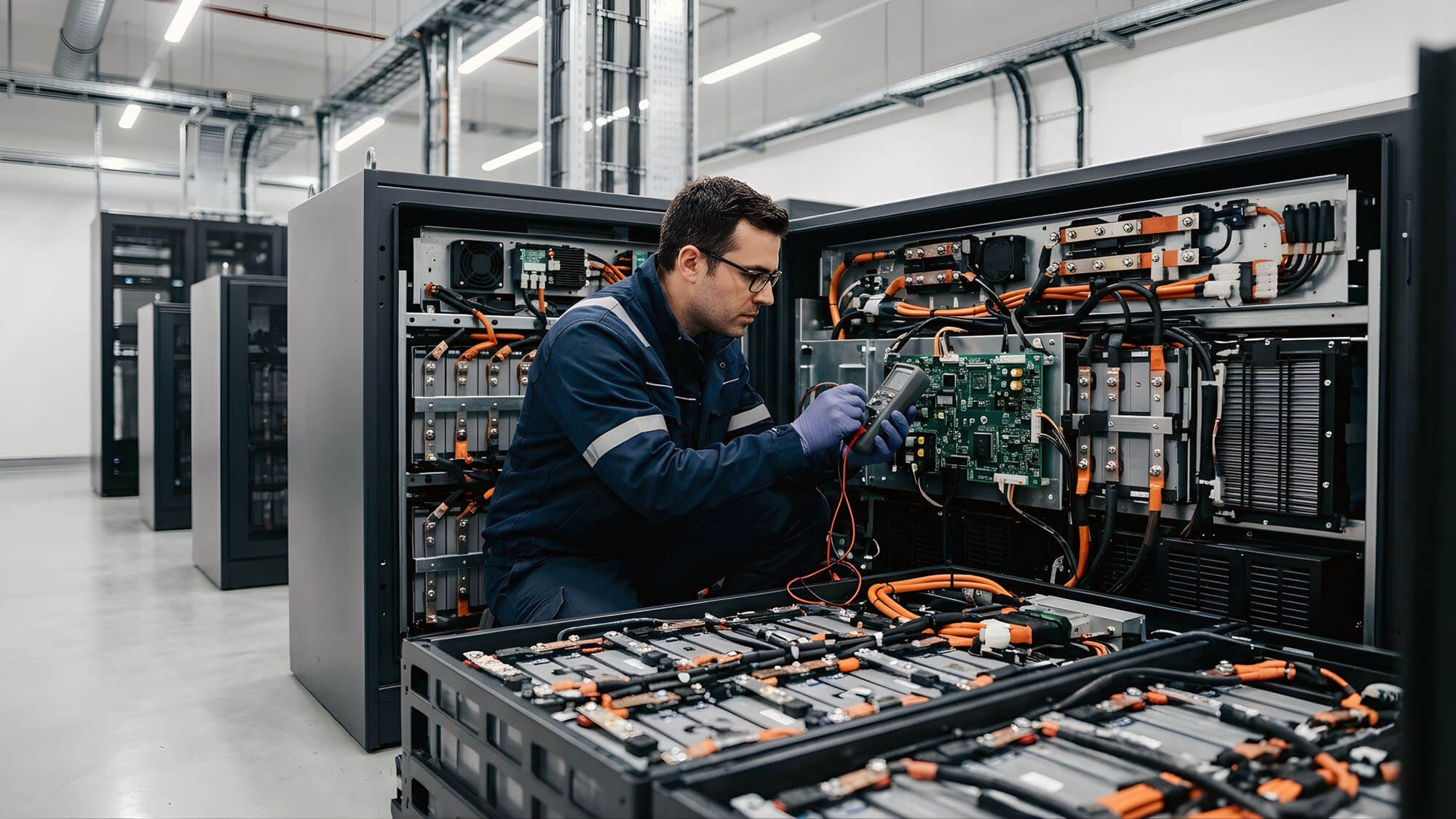
If you have spent years developing electric vehicle batteries, a data center project might look familiar. You still have cells, modules, a battery management system and a demanding customer. But the questions change once that battery becomes part of a stationary power system. The first task is to define how the system will operate, then build a test plan around that duty cycle and its installation.
An EV pack is designed around driving range, charging, weight, vibration and repeated cycling. A data center battery may spend years at a high state of charge waiting for an outage, then have to deliver power immediately and predictably. It must work with an uninterruptible power supply (UPS) and the rest of the facility’s electrical equipment. Automotive test results are useful, but they cannot answer every question about that application.
As the global economy becomes more energy intensive and AI driven, reliable “always on” power matters more to data center operations. Electrical and battery product safety is equally critical to keeping those systems running safely.
Define the Backup Power Duty Cycle
Let’s start with the load profile. What is the peak power demand when utility power drops? How quickly must the battery respond? How long must it support the load before generators take over? What happens if a generator fails to start? Those are just a few of the questions that will tell you more about how long the battery can support the load than simply its rated capacity alone.
A useful battery validation plan may include constant power discharge, step changes in load, an immediate second discharge after an incomplete recharge and operation at the edges of the specified temperature range. These are examples, not a universal test sequence. The site architecture and the customer’s required autonomy determine which cases matter.
The battery management system needs the same application specific review. Check how protection thresholds, contactors, alarms and communications interact with the UPS. If a module reports an abnormal condition, does the system isolate the fault, reduce available power or disconnect the entire battery? A protective response can be correct at the pack level and still interrupt the critical load. That interface should be tested with representative fault conditions.
Match each Standard to the Product and Installation
In the United States, engineers need to distinguish between product certification, fire propagation testing, transportation requirements and installation codes. The applicable path depends on whether the product is a battery, a UPS, or a complete energy storage system (ESS).
- UL 1973 addresses batteries for stationary and motive auxiliary power applications.
- UL 1778 addresses uninterruptible power systems. It may be relevant when the battery is supplied as part of a UPS configuration.
- UL 9540 addresses complete energy storage systems and equipment, including the interaction of the battery and other system components.
- UL 9540A is a test method for evaluating thermal runaway fire propagation, including LSFT (Large Scale Fire Test), in battery energy storage systems. Its report is evidence for fire safety decisions, not a substitute for UL 9540 certification.
- NFPA 855 addresses the installation of stationary energy storage systems, including fire safety provisions.
- NFPA 70 the National Electrical Code, addresses electrical installation requirements.
- UN 38.3 addresses transportation testing of lithium cells and batteries. It does not establish fitness for stationary operation.
A UPS battery room and a standalone ESS may face different requirements. Capacity, enclosure design, location and the local authority having jurisdiction (AHJ) can also change the installation path. It is best to confirm the intended configuration before deciding what data can be reused from an EV program.
Test Beyond the Cell
Cell results do not fully describe a rack of modules connected to power electronics. Heat rejection, fault isolation, control logic and fire behavior can change as assemblies grow. Testing should follow the product from the individual cell through the battery assembly and, when applicable, the complete end product.
Maintain a clear link between each test result and the hardware and software configuration tested. A change in cell supplier, firmware protection threshold, rack spacing or cooling airflow can affect both runtime and safety findings. That traceability helps the team decide which results remain valid after a design revision.
Intertek specializes in testing and certification of energy storage systems, battery backup systems and uninterruptible power supplies. Its performance capabilities can validate operational time under different environmental conditions and power loads. As a Nationally Recognized Testing Laboratory (NRTL), Intertek can evaluate and certify products to applicable standards and codes. Its capabilities cover the power system supply chain from individual cells to finished products.
For teams entering data center backup power, a practical starting package includes the intended installation, electrical architecture, load and runtime requirements, cell and pack test history, protection strategy and configuration records. With those details in hand, Intertek can help identify evidence gaps and build an appropriate performance and safety test plan.
Battery and Energy Storage testing and certification are only a small portion of the data center compliance ecosystem. Intertek provides essential assurance support throughout the planning and design phase, the facilities build phase, commissioning and even end-of-life decommissioning of your facilities and equipment.

You may be interested in...
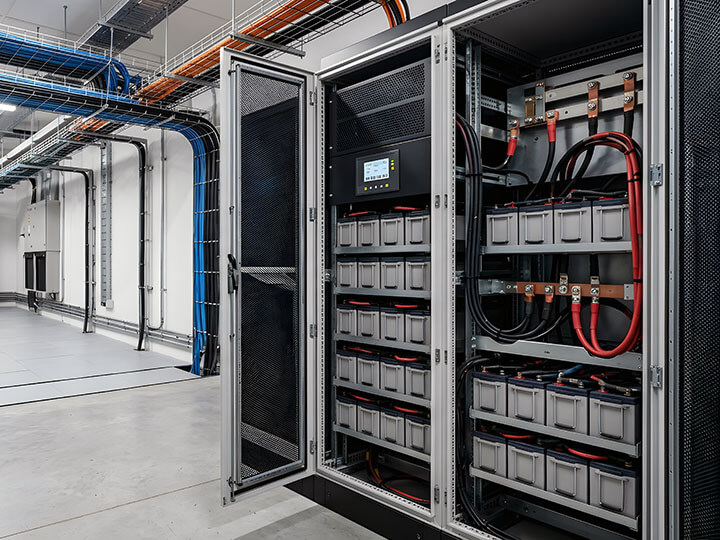
Data Center Battery Testing and Certification
Intertek provides performance testing, safety evaluations and certification for data center batteries, battery backup systems, UPS equipment and energy storage systems (ESS).